


ACECRAFT: Sky Hero
Skystone Games Pte. Ltd.
I spent time with ACECRAFT: Sky Hero as an action game built around shooting, movement, and cooperation. Its most distinctive idea is clear from the first sessions: this is designed for two players to share the action rather than treating multiplayer as a small extra. That changes how I look at every encounter, because success is not only about reacting quickly, but also about staying useful to the person flying beside me.
The game comes from Skystone Games Pte. Ltd. and is free to start, which makes it easy to try without committing money first. It is listed for Everyone, runs on Android 8.0 or later, and includes optional purchases priced from $0.99 to $99.99 per item. Those details matter because the experience is accessible to a wide audience, but players who dislike any form of spending pressure should approach the progression carefully rather than assuming that free entry means a completely frictionless journey.
What kept me interested was not simply the shooting. The stronger hook is the rhythm created by short-term goals: survive the current danger, understand the pattern in front of me, improve my control, and then return with a clearer plan. That loop gives the game a reason to be played in small bursts, while the two-player focus gives those bursts more personality when a friend is available.
How ACECRAFT: Sky Hero builds its early goals
The opening appeal is easy to understand. I am placed in an action setting where attention matters immediately, and the first objective is usually practical: stay alive, keep moving, and deal with what is approaching. That simplicity is useful because it lets a new player learn through play instead of forcing a long explanation before the game becomes interesting.
For a newcomer, the first meaningful goal is not chasing a perfect result. It is learning how to read the screen without panicking. In a shoot ’em up, targets, hazards, movement, and timing compete for attention. With another player involved, there is an additional layer: I need to notice whether my partner is handling a threat or needs space. That makes cooperation feel like a skill to develop, not merely a button to press.
Related News

Threads in Real Life: Who Should Join, Lurk, or Leave

How SHEIN Turned Shopping Into an Endless Content Feed

How to Make Fortnite Feel Smarter on Mobile

Should You Switch to Microsoft Outlook on Mobile?

Why Gallery Keeps Pulling Users Back

X Review: Why Its Network Still Matters
I found the two-player structure especially appealing in a casual evening scenario. One person can take the lead on immediate threats while the other watches for trouble elsewhere, then both can adjust when the situation changes. Even when a run does not go perfectly, the conversation afterward is more useful than a simple “try again.” We can identify whether we moved too aggressively, ignored a danger, or failed to support each other at the right moment.
That early learning process also reveals who may not enjoy the game. If you want an action title that can be played almost automatically while listening to music or watching something else, this is a poor match. The screen demands attention, and cooperative play adds social responsibility. A mistake can affect someone else’s run, so players who prefer completely private, low-pressure sessions may find the central concept less comfortable.
Small objectives are more useful than chasing speed
My advice is to set narrow goals during the first sessions. Instead of trying to master everything at once, focus on one behavior: moving with control, recognizing a recurring threat, or staying close enough to help without creating a collision of decisions. This approach makes improvement easier to notice and reduces the frustration that comes from judging a run only by whether it ends in victory.
Gallery
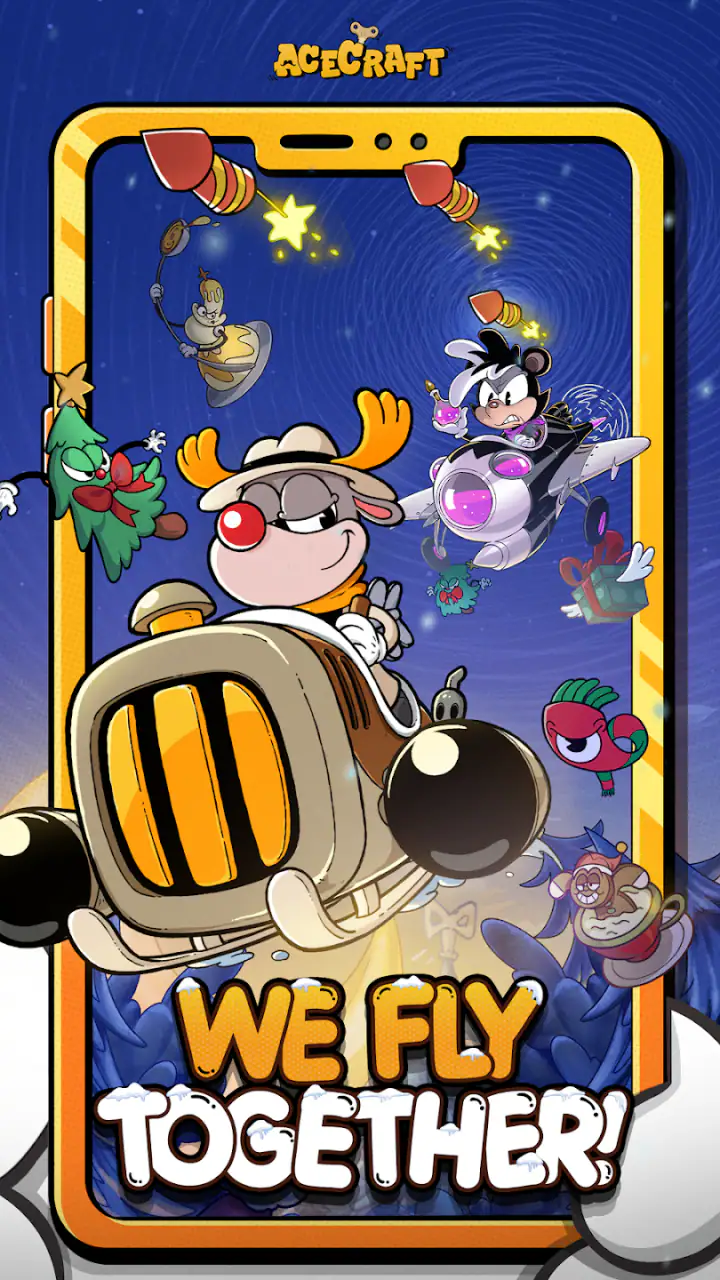
That is also where the game’s action category works in its favor. It does not need a complicated story explanation to give the player a reason to continue. The immediate challenge supplies the motivation. I can finish a session knowing exactly what went wrong, which is more satisfying than losing without understanding why.
There is a trade-off, though. Players who expect a large narrative campaign or deep role-playing choices should adjust their expectations. The appeal here is active play and repeated improvement, not a story-heavy journey. I would recommend it to someone who enjoys learning patterns and refining reactions, not to someone looking primarily for dialogue, exploration, or a long cinematic adventure.
Progress signals and the value of returning
A good action game needs to show progress even when the player is not collecting a huge number of visible rewards. In my experience, the clearest progress signal here is improved understanding. A stage or encounter that once felt chaotic becomes readable. I begin to move earlier, waste fewer actions, and recognize when cooperation is needed before the problem becomes urgent.
That kind of progress is easy to overlook because it is partly internal. The game benefits when the player pays attention to these changes. If I only measure success by unlocking something immediately, I can miss the fact that my positioning and timing are improving. The better approach is to treat each attempt as information: which danger forced a mistake, which movement created safety, and whether my partner and I had a clear division of responsibility.
The public response suggests that this loop has found an audience. The game holds an average rating of 4.6 from around 37 thousand ratings, with more than 500 thousand installs. I do not treat those numbers as proof that everyone will enjoy it, but they do indicate that the central idea has reached a substantial group of players. The important question for an individual user is whether the cooperative shoot ’em up format matches their habits.
Progress feels more meaningful when I return with a specific experiment in mind. For example, I might decide to stay more conservative during a crowded section, or communicate earlier instead of waiting until a threat is already close. This turns repetition into practice. Without that mindset, repeated attempts can start to feel like a demand rather than an invitation.
How to make each attempt teach you something
I recommend discussing one adjustment before starting another run with a friend. Keep it concrete and limited. “We need to play better” is too vague; “I will watch the side you are not covering” gives both players something they can actually test. This is one of the less obvious strengths of a two-player action game: a failed attempt can produce a shared lesson instead of only an individual score.
It also helps to avoid changing every habit at once. If movement, timing, and communication all change together, it becomes difficult to know what worked. I prefer to keep one reliable behavior, such as controlled movement, while testing a different response to danger. That makes the learning curve feel fairer and gives the game’s challenge more structure.
Solo-minded players should think about this before installing. The game’s identity is tied to two-person cooperation, so its strongest moments are likely to come when both players are engaged. If your usual gaming time is unpredictable or you rarely have someone ready to play, the experience may feel less compelling than a conventional single-player shooter designed around independent progress.
Difficulty, pacing, and the point where action becomes pressure
The difficulty curve matters because shoot ’em ups can become tiring when every moment feels equally intense. What I look for is a change in demands: an early section that teaches the language of danger, followed by situations that ask me to apply that knowledge under more pressure. The cooperative format makes this more complicated, because the game is testing two people’s decisions at the same time.
I found the best pacing came from treating survival as a sequence of manageable decisions. Instead of staring at the entire screen and trying to solve everything instantly, I focused on the next safe movement and the most urgent threat. That narrowed view helped the action feel deliberate. It also made mistakes easier to diagnose, since I could identify the moment when attention shifted in the wrong direction.
There is a natural tension between challenge and accessibility here. A game rated Everyone can be inviting to younger players and families, but an accessible content rating does not mean every moment will be effortless. The action still asks for concentration and coordination. I would happily suggest it for a family or friend pairing that enjoys learning together, while warning that a large difference in skill can make the experience uneven.
That skill gap is one of the game’s practical limitations. A highly experienced player may understand threats and movement faster than a beginner, which can create an uncomfortable dynamic if the stronger player takes over every decision. The better solution is to use cooperation as coaching: explain one choice, leave room for the other player to react, and accept that early attempts may be slower.
When the pacing works and when it may not
The pacing works best for people who enjoy focused sessions with a clear beginning, middle, and end to each attempt. It is less suitable for players seeking a relaxing game that can be paused mentally while multitasking. Even if the controls are easy to approach, the attention required by hazards and teamwork remains real.
I also see a difference between challenge that encourages another attempt and pressure that makes a player feel trapped in repetition. The former happens when I understand what I can improve. The latter appears when a failed run feels disconnected from a useful lesson. To keep the experience on the positive side, I would take a short break after several unsuccessful attempts and return with a new plan rather than immediately repeating the same behavior.
Compared with a standard single-player shoot ’em up, this game offers more opportunities for shared problem-solving but less independence. In a solo alternative, I can blame only my own timing and play exactly at my preferred pace. Here, the reward is conversation and coordination, but the cost is dependence on another person’s availability and decisions. Neither approach is automatically better; the right choice depends on whether you want personal mastery or a shared challenge.
Unlocks, retention pressure, and spending decisions
The long-term question is whether the game gives me enough reason to keep returning after the first novelty fades. The answer depends on how much I enjoy improvement itself. The repeated action, cooperative problem-solving, and desire to handle difficult situations more cleanly can sustain interest for players who like mastery. Someone who needs constant new content or a strong narrative reason to continue may find the loop less satisfying.
The free entry point lowers the barrier to testing that loop. I can find out whether the two-player structure fits my household or friend group before spending anything. That is valuable because the game’s main appeal is experiential; a description cannot tell me whether coordinating with another person feels exciting or stressful in practice.
At the same time, optional purchases range from $0.99 to $99.99 per item. The wide span means I would approach the shop with a clear personal rule: play first, decide later, and never treat a purchase as a requirement for proving skill. I would also avoid buying during a frustrating session, because difficulty can make any paid shortcut feel more tempting than it would after a calm evaluation.
This is an important retention trade-off. A healthy action loop encourages me to return because I want to play better. A less comfortable loop can make me return because I feel behind or pressured. I cannot recommend spending simply to accelerate progress without first understanding how the game’s free experience fits your expectations. For families, I would discuss purchases in advance and use the device’s purchase controls so that the free download remains a deliberate trial rather than an open-ended expense.
Who should keep playing and who should stop
I would keep ACECRAFT in my rotation if I had a regular partner who enjoyed short, demanding action sessions. The game has a clear social advantage over a conventional shooter: it creates a reason to communicate, and even a failed attempt can become a shared puzzle. It is also a good fit for players who like visible improvement through better reactions and smarter positioning rather than through passive progression alone.
I would stop playing if I mainly wanted a quiet solo game, a story-led experience, or a title with no spending considerations at all. I would also be cautious if my partner and I have very different tolerance for failure. Cooperative action can strengthen a friendship when both people treat mistakes lightly, but it can become irritating when one player criticizes every error or refuses to adapt.
Another practical tip is to choose a consistent communication style before beginning. Short calls such as “left,” “wait,” or “I have it” are more useful than a stream of commentary during a busy moment. This is not a feature claim; it is simply the best way I found to make the game’s two-player premise work in real life. Clear communication reduces duplicated effort and leaves more attention for the action itself.
My progression verdict after playing
ACECRAFT: Sky Hero succeeds when its goals, challenge, and pacing point in the same direction. The early objective is easy to grasp, the progress signal comes from becoming more capable, and the two-player format gives repeated attempts a social reason. I like that the game can turn a short session into a focused exercise in timing and cooperation rather than requiring a large commitment before the action becomes enjoyable.
Its limitations are equally clear. The cooperative focus is not a minor detail, so people looking for a purely solo experience should choose a different action game. The pressure of repeated attempts may also wear down players who do not enjoy learning through failure. Optional purchases deserve a measured approach, especially because the price range reaches from small amounts to $99.99 for an item.
The current version is 13.1.33.3651, and the game is free to download for compatible Android devices. With an Everyone rating and support beginning at Android 8.0, it is approachable from a device and content perspective, but the real test is personal: do you have someone who wants to share the challenge, and do you enjoy improving through repeated action?
My final recommendation is positive with a specific condition. Try it if the idea of a cooperative shoot ’em up sounds more exciting than another solitary action game, and give the early sessions enough patience to reveal the teamwork underneath the shooting. I would not recommend spending immediately or forcing yourself through frustration. Start free, play with a partner whose attitude matches yours, set small goals, and judge the game by whether each return feels more skillful than the last. For the right pair, that is where ACECRAFT: Sky Hero becomes more than a quick arcade diversion: it becomes a shared challenge worth revisiting.
FAQs for ACECRAFT: Sky Hero
What is ACECRAFT: Sky Hero?
ACECRAFT: Sky Hero is a colorful arcade shoot ’em up for mobile devices in which you pilot a small aircraft through enemy-filled stages. The game combines classic bullet-hell action with cartoon-style visuals, upgrade systems, collectible aircraft, and special abilities. Its short missions make it suitable for quick sessions, while tougher stages and stronger enemies provide a greater challenge as you progress.
How does the gameplay work in ACECRAFT: Sky Hero?
Gameplay focuses on moving your aircraft around the screen to avoid enemy bullets while automatically attacking opponents. You must watch attack patterns, collect useful items, defeat bosses, and activate skills at the right moment. Each stage gradually increases the pressure, so success depends on positioning and timing rather than simply holding one direction. Different aircraft and upgrades can also change how a level feels.
Is ACECRAFT: Sky Hero free to download and play?
ACECRAFT: Sky Hero can generally be downloaded for free, but the experience may include optional in-app purchases. These purchases can provide resources, upgrades, special aircraft, or other progression-related advantages. You can play without spending money, although free players may need more time to collect materials and improve their equipment. It is also worth checking the store listing for the latest purchase and advertising information.
Does ACECRAFT: Sky Hero require an internet connection?
Some parts of ACECRAFT: Sky Hero may require an internet connection, particularly account features, event content, advertisements, cloud-related functions, and purchases. Basic gameplay availability can depend on the version installed and how the developers configure access to stages. Before traveling or playing offline, open the game without a connection to confirm what remains accessible, since online requirements can change through updates.
Is ACECRAFT: Sky Hero suitable for all players?
The game is easy to understand because its controls are straightforward, but its later missions can become quite demanding. Players who enjoy fast arcade action, repeated attempts, upgrades, and boss battles will probably find it entertaining. However, people sensitive to flashing effects or frequent on-screen movement should review the game’s settings and take breaks. Parents should also check the age rating and in-app purchase options.
Pros
- Fast-paced aerial combat is easy to learn but remains rewarding to master.
- Bright cartoon visuals give the game a cheerful
- accessible personality.
- Short missions fit well into quick gaming sessions on mobile.
- Multiple heroes and aircraft encourage experimentation with different play styles.
- Regular rewards help maintain progress even during shorter play sessions.
Cons
- Later stages can become noticeably repetitive without meaningful mission variety.
- Upgrade choices may feel confusing until you understand each aircraft’s strengths.
- Some encounters rely heavily on upgraded gear rather than careful flying.
- The colorful interface can feel busy during intense combat sequences.
- Progress may slow considerably for players who avoid optional purchases.


